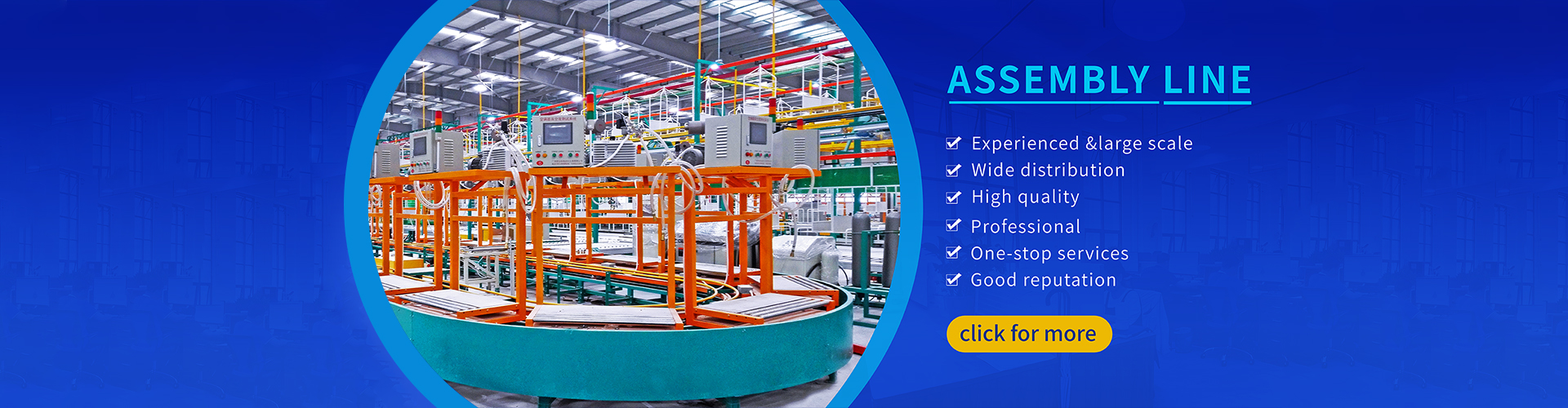
How can a refrigerator automatic production line balance personalized customization needs with standardized production efficiency during its flexible manufacturing upgrade?
Publish Time: 2026-05-28
Against the backdrop of advancing intelligent manufacturing and consumption upgrades, the refrigerator industry is gradually shifting from traditional large-scale standardized production to a development model that combines flexible manufacturing and personalized customization. As the core manufacturing carrier, the refrigerator automatic production line not only needs to maintain high-efficiency and highly consistent standardized production capabilities but also needs to adapt to the rapid switching needs of different models, capacities, and functional configurations.
1. Building a Modular Production System to Enhance Flexibility
The prerequisite for achieving a balance between personalized customization and standardized efficiency is establishing a modular production system. By breaking down refrigerator production into multiple standard functional modules, such as cabinet structure modules, refrigeration system modules, control system modules, and door decoration modules, flexible combinations can be achieved without changing the core production process. This modular design not only ensures standardized production of key components but also enables diversified product configurations through the combination of different modules, thereby meeting diverse market demands while ensuring efficiency.
2. Introducing Flexible Robotic Systems to Improve Switching Efficiency
In automated production lines, robotic systems are a core element in achieving flexible manufacturing. By introducing programmable multi-degree-of-freedom industrial robots, tasks can be quickly switched between different product models. For example, in compressor installation, inner liner assembly, and door assembly, robots can automatically adjust their gripping paths and assembly parameters according to the product model, thereby reducing manual intervention and changeover time. Simultaneously, the rapid replacement technology of intelligent end effectors further enhances the production line's ability to adapt to different product specifications, improving overall production efficiency.
3. Achieving Precise Scheduling with Digital Control Systems
Digital control systems are a key bridge connecting personalized needs with standardized production. By introducing a Manufacturing Execution System (MES) and an Industrial Internet of Things (IIoT) platform, real-time monitoring and dynamic scheduling of the entire production process can be achieved. Upon receiving different order requirements, the system can automatically decompose production tasks and rationally allocate production cycles and equipment resources, thereby avoiding production conflicts and resource waste. Furthermore, through data analysis and intelligent algorithm optimization, the efficiency of the production line can be continuously improved, ensuring that customized production does not come at the expense of efficiency.
4. Optimizing the Quality Inspection System to Ensure Consistency
In flexible manufacturing, the co-production of different product models on the same line can easily lead to challenges in quality consistency. Therefore, a smart quality inspection system is needed for full-process control. For example, using AI visual inspection technology to automatically identify appearance defects and monitoring cooling performance and sealing in real time through sensor data can effectively reduce human inspection errors. Simultaneously, establishing a unified quality standard database ensures that different products meet standardized quality requirements even during customized production, thus achieving a dual guarantee of quality and efficiency.
5. Reducing Changeover Losses through Intelligent Scheduling
Production changeover costs are a significant factor affecting the efficiency of flexible manufacturing. Excessive changeover time directly reduces overall capacity. Therefore, intelligent scheduling and pre-configured production strategies are needed to reduce changeover losses. For example, optimizing process paths and pre-loading equipment parameters during the production planning stage can reduce downtime during production changeovers. Furthermore, dynamic takt time balancing technology can enable smooth transitions between different products on the same production line, thereby improving overall equipment utilization.
In summary, during the upgrade of refrigerator automatic production lines to flexible manufacturing, building a modular system, introducing flexible robots, optimizing digital control systems, improving intelligent inspection systems, and reducing changeover losses can effectively achieve a balance between personalized customization and standardized production efficiency. This not only enhances the adaptability and intelligence level of the production line, but also provides solid support for the refrigerator manufacturing industry to develop towards high-end and diversified products.